

“Data is the only moat left.”
He spent months building and pitching his coding agent, but no one was buying it. After reading the market and too many PG essays, he was finally ready to admit it:
SaaS is dead.
“All we do is display data. If you already have the data and can one-shot the UX, why would you pay for software? The only thing left to worry about is proprietary data.”
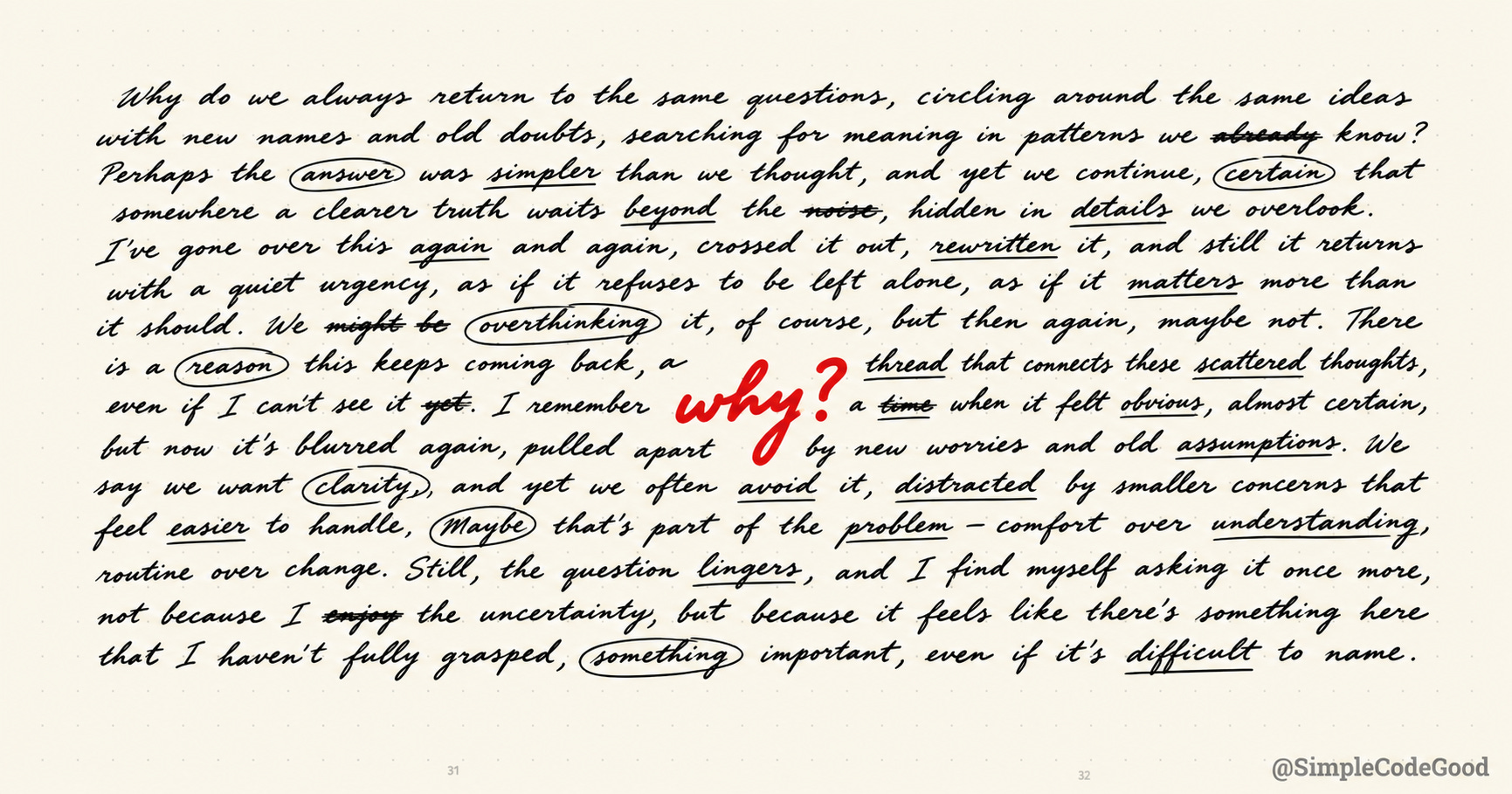
He then pitched me on an AI spreadsheet MCP. When I asked him what the “why” was behind the product — the deeper reason for its existence — his eyes dropped, as if he was considering the question for the first time. It only took a few seconds of silence for us to see his MCP idea for what it really was: a thinly veiled attempt to incentivize users to hand over their data.
The founder is right that the SaaS ship is sinking. But data isn’t the shore I’d swim toward. Not because data isn’t still valuable, but because there’s something more valuable: story.
Story is the substrate of emotion. It’s how we connect to the world and carve out our place in it. It’s what has you skipping up the stairs on the way to your desk. Its grandiosity convinces you to take a pay cut to join three gawky twenty-year-olds in SF. Its hollowness has you packing when growth slows.
The most powerful person in the world is the storyteller. The storyteller sets the vision, values, and agenda of an entire generation that is to come, and Disney has a monopoly on the storyteller business. You know what? I am tired of that bullshit, I am going to be the next storyteller.
— Steve Jobs, NeXT cafeteria 1994
Story is more defensible than data, because you’re the only one living yours. It’s more accessible than #000000 on #FFFFFF, because you don’t need to see it to feel it. It’s more performant than 0(1), because emotion outpaces hardware.
It’s also messy. That’s why type-A engineers like us shy away from it. We’d rather improve a performance bottleneck or follow a checklist than write a fairytale about our lives. It’s uncomfortable. But as the building gets easier, the Why gets harder to avoid. When software itself is easy to reproduce, the narrative behind its existence matters more than its UX.
When the fortunate sons of yore got their first horse-and-buggy on their sixteenth birthday, I expect they felt similar to us now. Suddenly, they could get from A to B without physical effort. After staring at the ornate patterns inside those cotton-laced buggies, did their eyes glance down in embarrassment as they considered for the first time why they were going where they were going?
As AI’s capacities continue to expand, I expect engineers will have more of these moments. Now that we don’t have to expend much cognition to get what we want anymore, we’ll have to allocate more of it to building a narrative.
This is so unnatural because we’ve been conditioned to look outward in software. Build what people want. Look at the usage. Devour customer surveys and market reports. Story requires us to look inward. Consider our childhoods, our parents, our lineage, the moments of pain and triumph that shaped who we’ve become, the future we want to build for our kids.
Messy stuff.
You can work backward from market trends until you arrive at a product whose reason for existing is to collect data. Or you could work forward from your own life to craft a narrative and give it to those who need to hear it.
In a binary industry that’s afraid of emotion, your willingness to wade into the mess might be your real edge.
More
Tommy Blackrose’s story about Steve Jobs (quora)
Robert McKee’s book on Story (mckeestory)
