


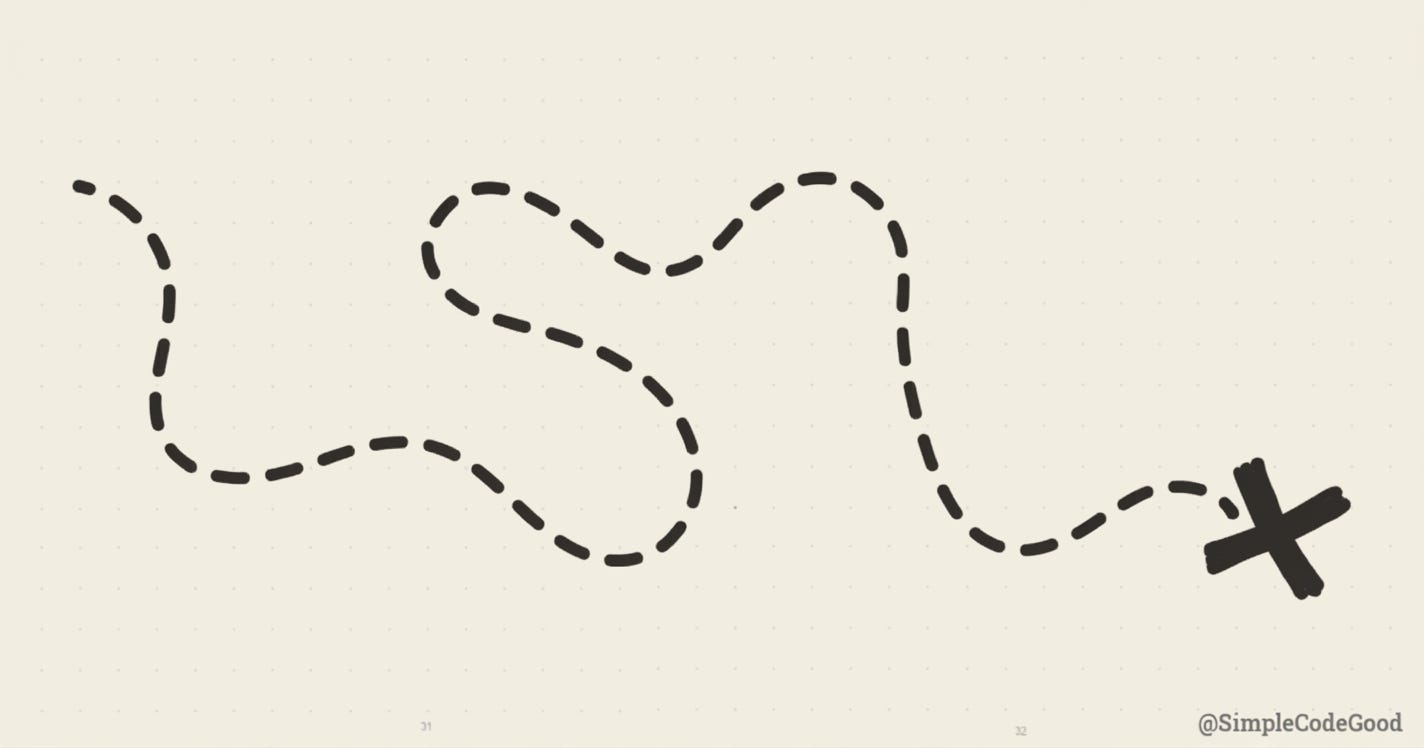
You’ve probably mastered a craft by now — coding, shooting a basketball, lifting weights, playing cello, cooking sourdough, editing videos, writing short stories — and doing so required years of consistency while you learned the basics. Eventually, you got comfortable enough with the standard building blocks to add another layer: the advanced techniques. You started to impress your friends and peers, so you kept developing. More difficult shots, faster times, more ingredients, more configs.
Eventually, adding more started to feel draining. The more layers you added, the less you loved the craft. You yearned for those early days when you only knew a few chords, a few ingredients, or a few data structures, when you didn’t need a meeting or an SOP to make a change.
You still remembered the purity of those early days, how freeing it felt to just create. The yearning for the joy that came from within you then overpowered the validation you got from others now.
So you stopped going down the path of advancement and turned around to where you started — to the basics.
That turnaround was uncomfortable. The people who used to shower you with praise started to ignore you. Your retreat made those you passed on the way back question whether they, too, were on the wrong path. Unprepared to change, they quietly mocked you as you passed.
If you ignored them long enough, you finally got back to basics.
And it was awesome. You rediscovered the joy of your craft and its fundamentals. You felt like a kid again, but more mature and grateful. (Love on your first day of school feels like a rollercoaster. Love on your 20th anniversary feels like peace.)
You looked around and saw something surprising: the GOATs were there also, and they felt the same appreciation.
Linus was writing a for loop in C
MJ was working on his midrange
Chris Bumstead was squatting
Yo-Yo Ma was practicing scales
Paul Hollywood was making a rustic loaf
Hillier-Smith was exporting a video that has two tracks
Hemingway was writing dialog at a third-grade reading level
In good spirits and company, you resolved to stay with the basics as long as possible, and to venture back down the path of advancement only if necessary
… in that one domain.
The trap is that, even after going through that journey and discovering the superiority of simplicity, we think it only pertains to that particular craft.
We’ll resist complexity with monastic discipline during our evenings, while welcoming it like a heathen during the workday. We’ll build a stable monolith for our lifelong side project while insisting on a sprawling microservice architecture for a skunkworks project at work. We’ll cook a five-ingredient salad for ourselves because it tastes great, but insist on a twenty-ingredient one when company is over because it looks great.
Simplicity isn’t relative. It’s not an advantage in one craft and a disadvantage in another. The superiority of simplicity is universal. I don’t have to convince you of that, just like I don’t have to convince you that gravity is real. Just jump, and you’ll see how futile it is to defy gravity. If you ever doubt whether the basics are enough, just make things complicated and see if you enjoy it. You’ll see how futile it is to defy the power of simplicity.
